The
Post-Work
City.
An open call inviting artists, architects, planners and dreamers to picture the spaces we would build for ourselves if we no longer had to work to live.
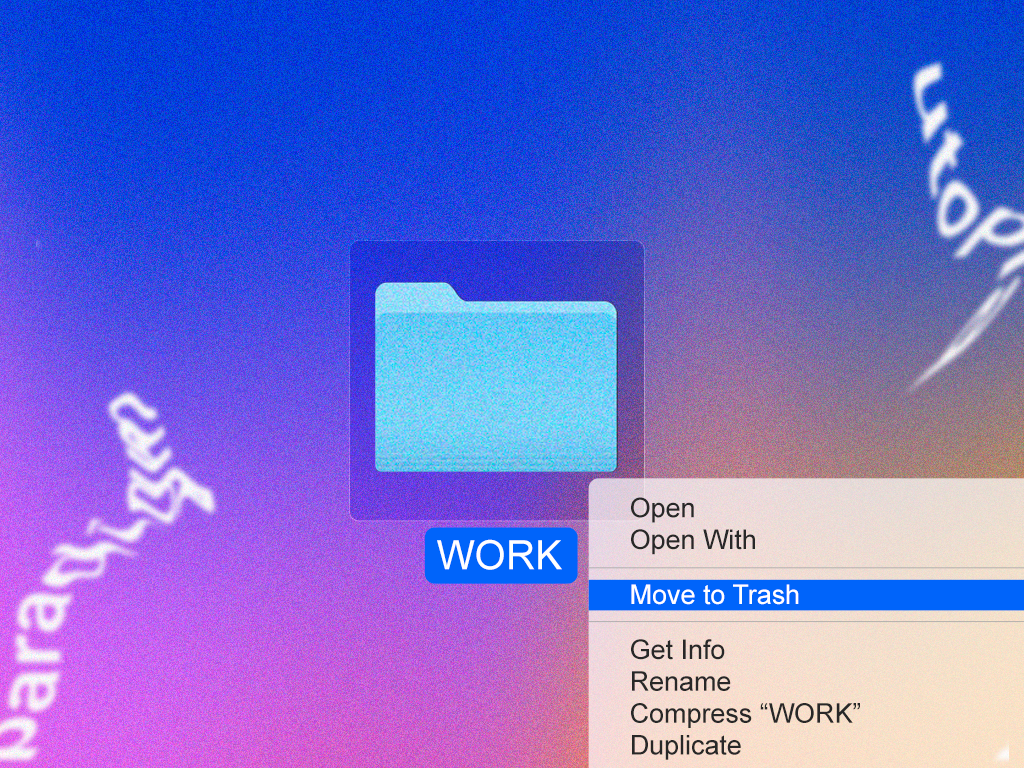
§ 01 — Premise
We are called to be architects of the future, not its victims.
— R. Buckminster Fuller
A work-saturated life and the increasing precarity of white-collar employment qualify us to demand a different world.
Work has not only dominated our political imaginaries — it has shaped the very landscapes in which we live our lives. Innovations in artificial intelligence, low-cost networked sensors and robotics, combined with prolonged economic stagnation for large parts of the population, have made proposals like universal basic income feel newly plausible.
These proposals carry a quietly radical utopian dimension. They beg the question: what could society be like if production was automated, the material abundance equitably distributed, and nobody worked at all?
And yet, as more and more people contemplate that future, there has been almost no significant discussion of how our built environments would have to change to accommodate it.
§ 02 — We're at a crossroads. Ask yourself:
- 01
What does a street look like when nobody is rushing to be somewhere?
- 02
Where do the office towers go when the offices empty out?
- 03
What new rooms appear in a house when nobody comes home exhausted?
- 04
What does the city look like at 10am on a Tuesday in a world without jobs?
- 05
Who tends the gardens, the libraries, the bathhouses, the kids?
- 06
What does abundance look like in concrete and glass?
§ 03 — The Project
A field guide to abundance.
The Post-Work City began in 2019 as a small open call to imagine the spaces we would build for ourselves once labour was no longer the organising principle of our days. Drawings, photographs, collages, fictions, plans and blueprints arrived from thirty-two cities across two years.
This site is the living archive of those submissions — and a renewed invitation to anyone still asking the question.
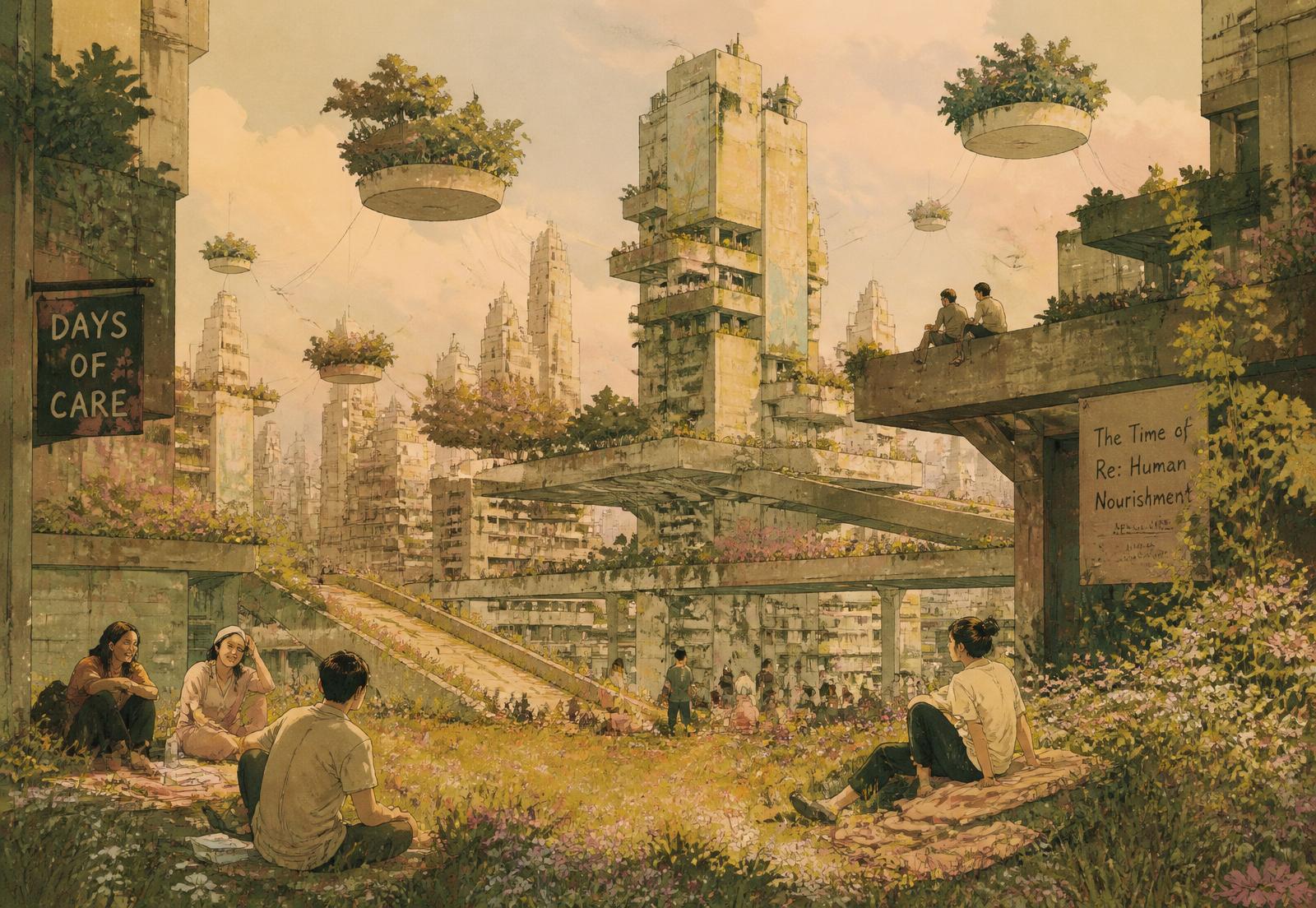
Fig. 02 — "Days of Care," composite illustration drawn from the archive.
§ 04 — Gallery
Submissions from the archive.
A rotating selection. Each entry imagines one corner of one city, redrawn for a world where the working day is over.
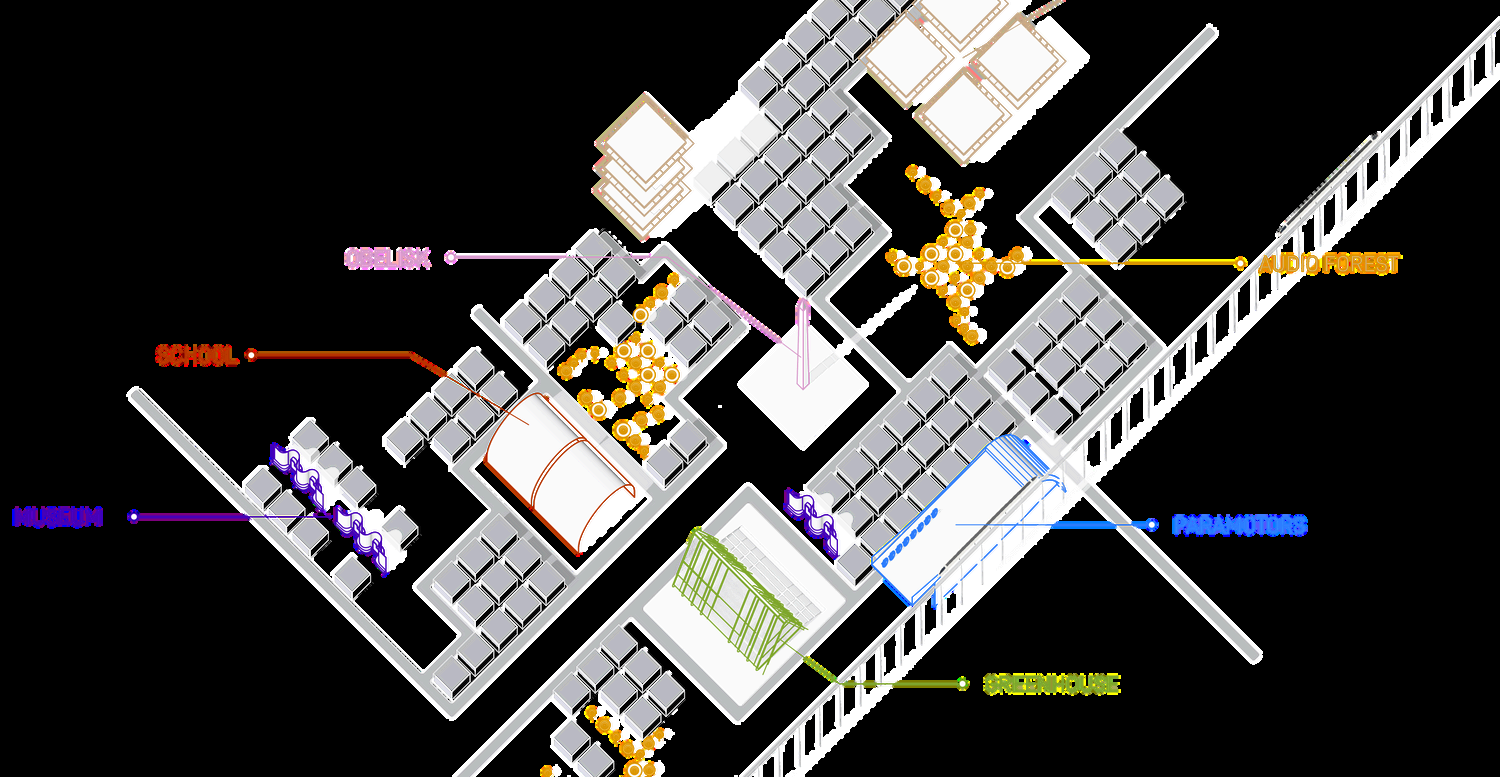
Amorphous Grids
An isometric atlas of seven civic interventions — School, Audio Forest, Paramotors, Museum, Greenhouse, Housing and Obelisk — re-zoning the city block by block around learning, leisure, reflection and gathering.
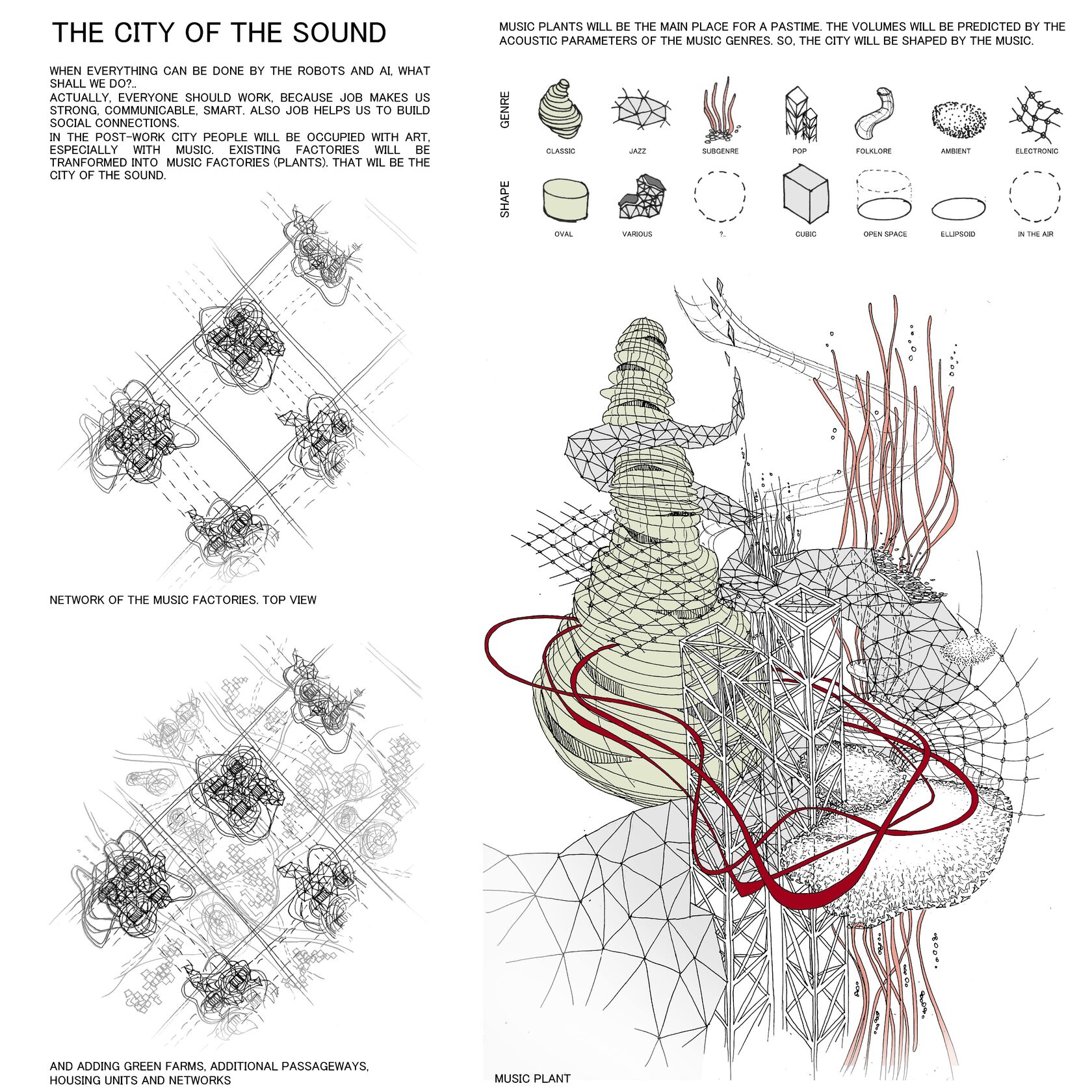
The City of the Sound
Factories transformed into music plants. The volume and shape of each building is dictated by the acoustic parameters of a musical genre — the city is literally shaped by what it sings.
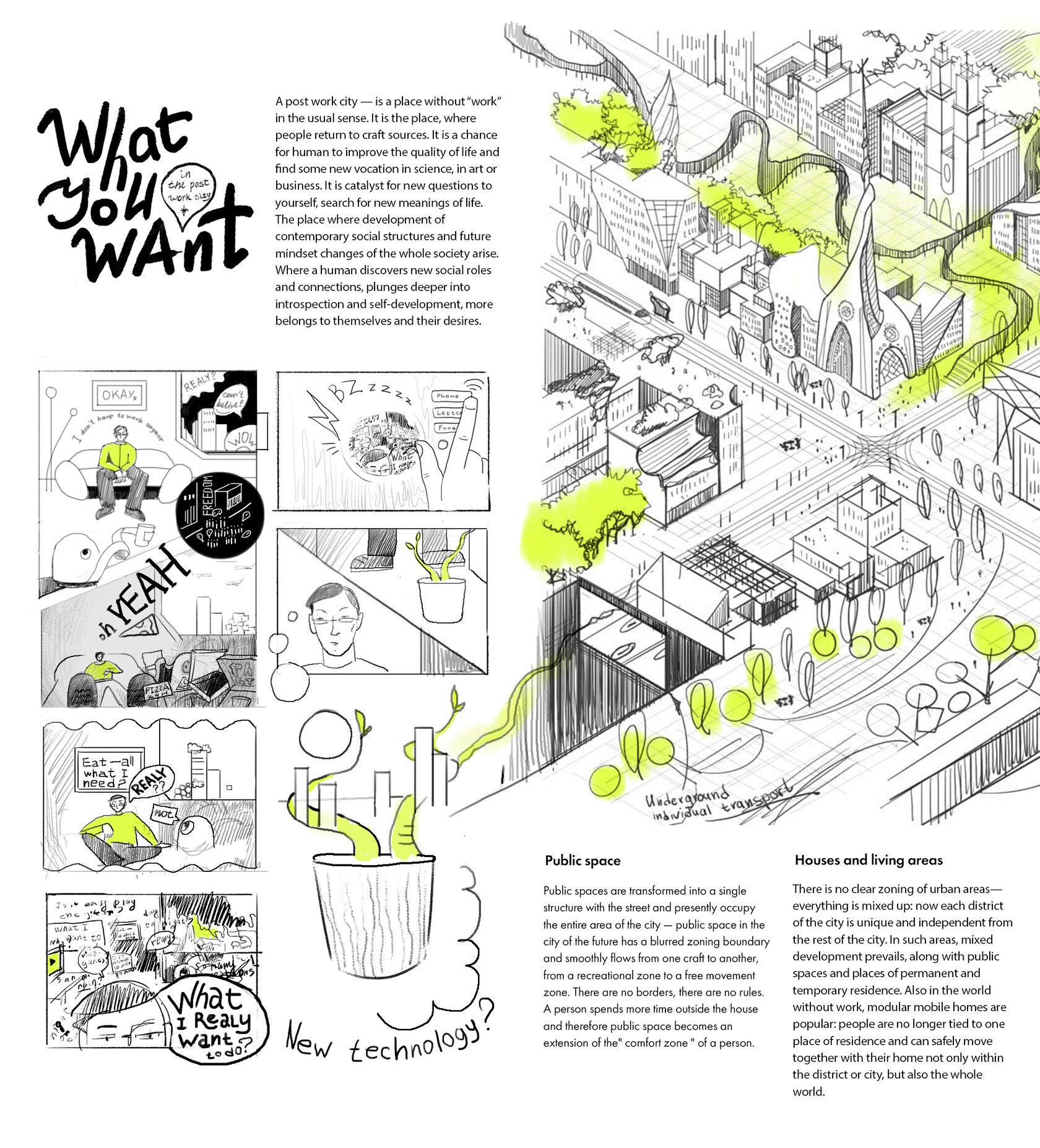
Our fantasies / Our future city
A hand-drawn manifesto: the post-work citizen returning to craft, public space dissolving into the street, modular mobile homes free to migrate. Public space becomes an extension of the comfort zone.
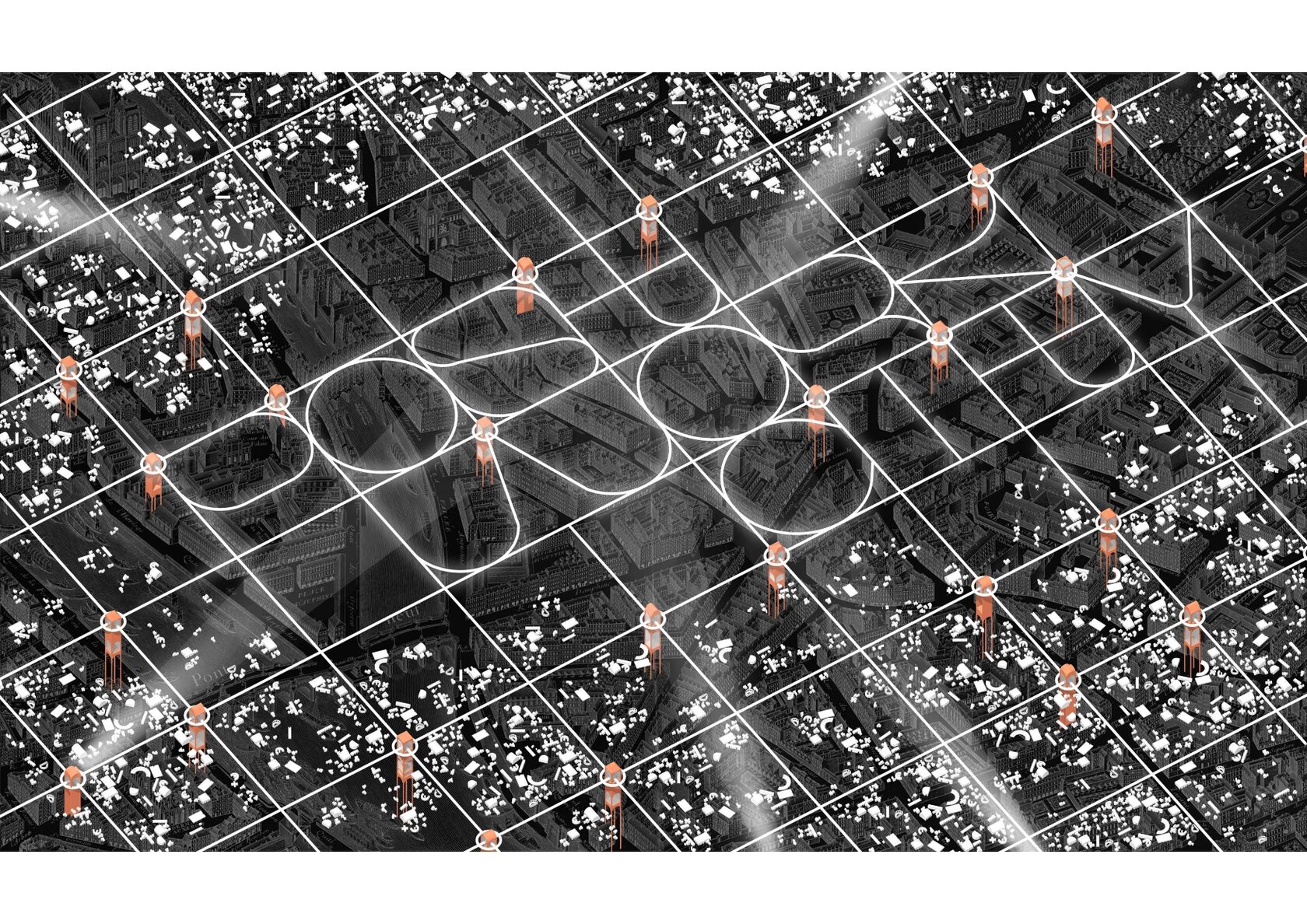
Level up Net-City
A grid of glowing nodes laid over the historic plan of the city — orange beacons stitched together by light, mapping a network of free, playable public infrastructure.
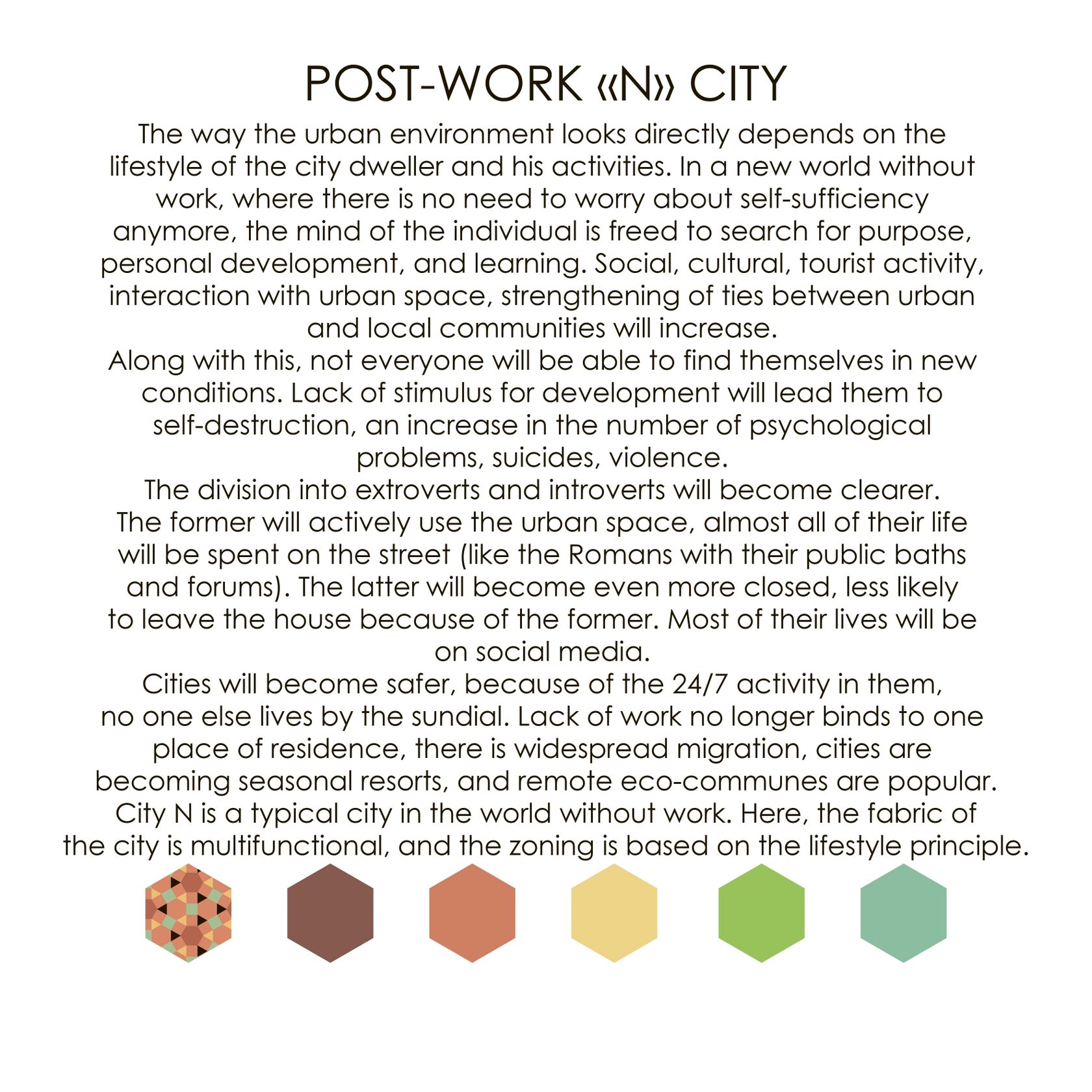
Post-Work «N» City
A typology of six tiles: the multifunctional fabric of a typical city in a world without work, zoned by lifestyle rather than industry — for extroverts of the street and introverts of the screen alike.
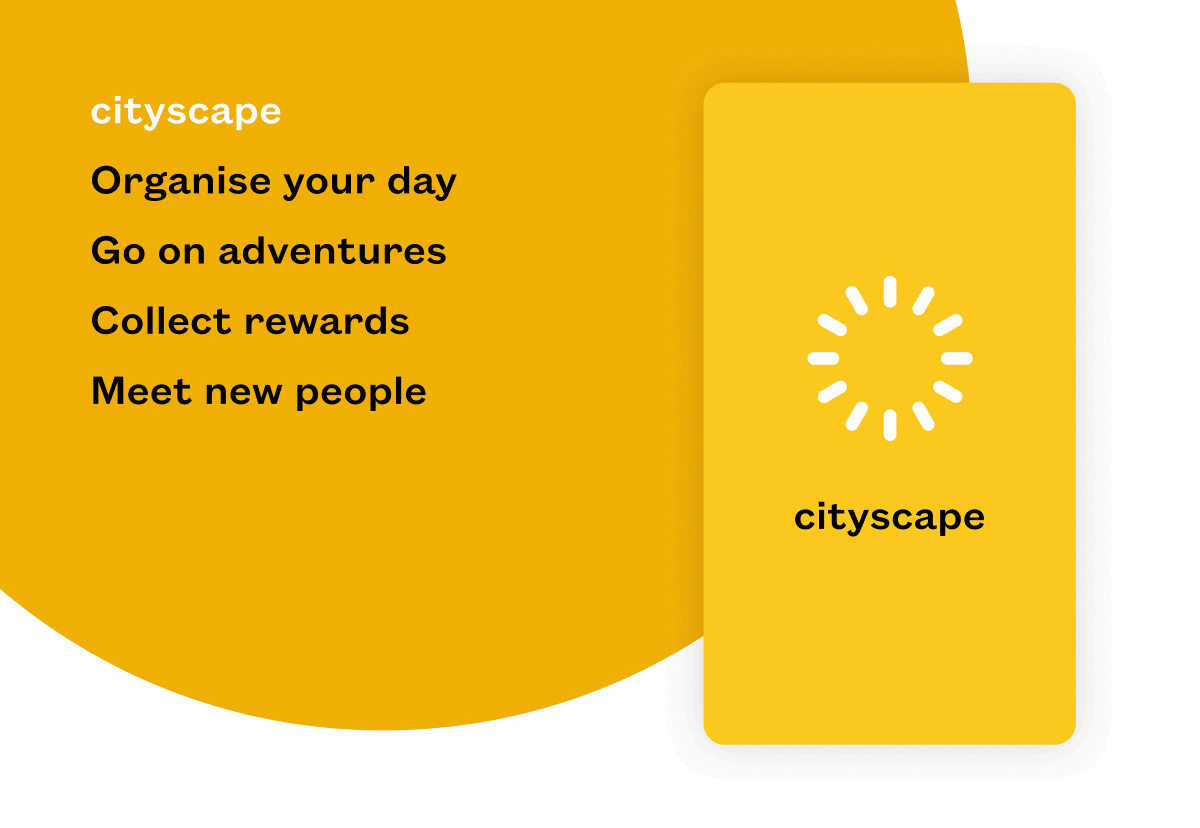
Cityscape
An app for the post-work day: organise your time, go on adventures, collect rewards, meet new people. The city as a soft game you opt into.
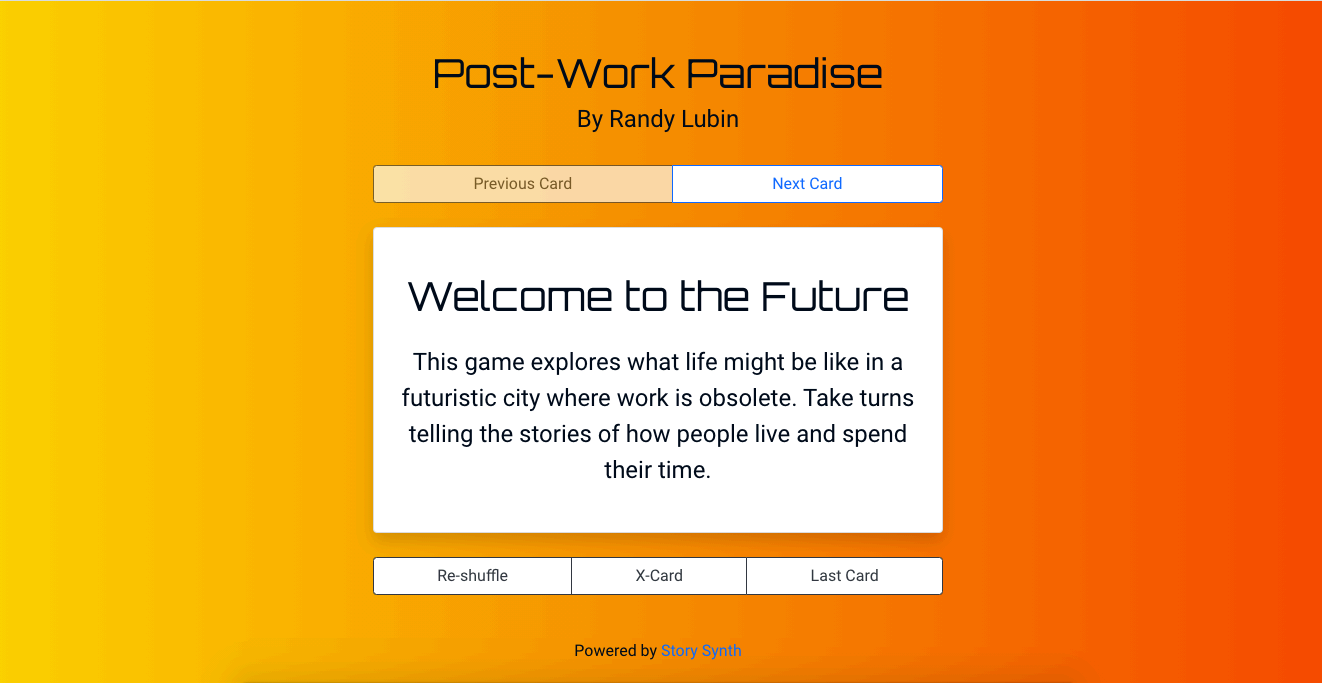
Post-Work Paradise
A storytelling card game for futures where work is obsolete. Players take turns narrating how the inhabitants of a post-work city live and spend their time.
§ 06 — Submit
Add your city to the archive.
Send us a single image or document and a short note describing the place you're imagining. We read everything.
Or email directly — hello@post-work.city